
As may have been pointed out ad nauseam, one might not always get the best first impression of a city whenever arriving by train. Train stations have a tendency to de-gentrify their immediate vicinity and disproportionately contribute the overall ‘armpittyness’ of the surroundings. Secure in our knowledge that things would surely improve once we departed the blast radius of poverty and despair by which we were greeted, we trundled on. What made the area in which our Sofia AirBnB is located, and as we’d later also see in Sofia in general, is how apparent the wave of renewal is sweeping across the city. Vastly simplified, excluding the humdrum and depressing communist-era architectural reminders, residential buildings are generally in one of three states:
- Newly renovated, with vibrantly painted facades from canary to teal to apricot.
- Roof-caved-in dereliction
- Scaffolding-clad and under renovations to transform from 2 to 1
Walk for a few minutes and the neighbourhood transforms almost instantly from purely residential to mixed retail supported by a reliably and well-used system of dated, yet functional trams, often in a single-car configuration. Today we wanted to walk however to experience both the historical and the contemporary sites of the city. We brought rain jackets as the weather here has some serious bipolar leanings and is liable to go from blistering sun to rip-roaring thunderstorms accompanied by biblical downpours in a matter of minutes. These atmospheric temper tantrums are over as quickly as they started however and constitute no reason to sit out a chance to go exploring.

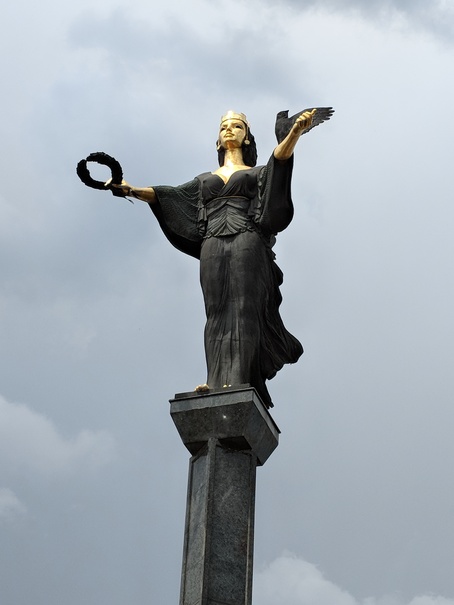
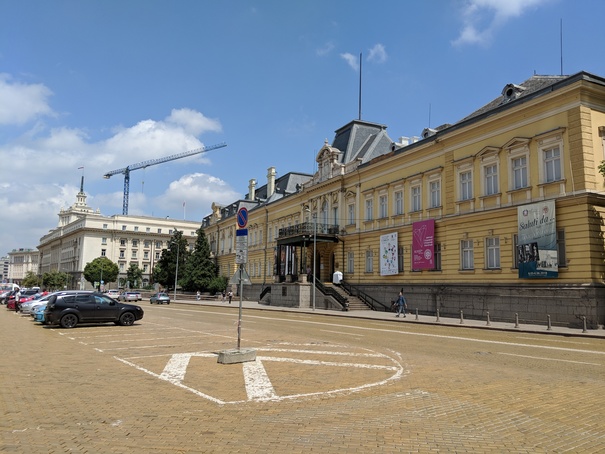
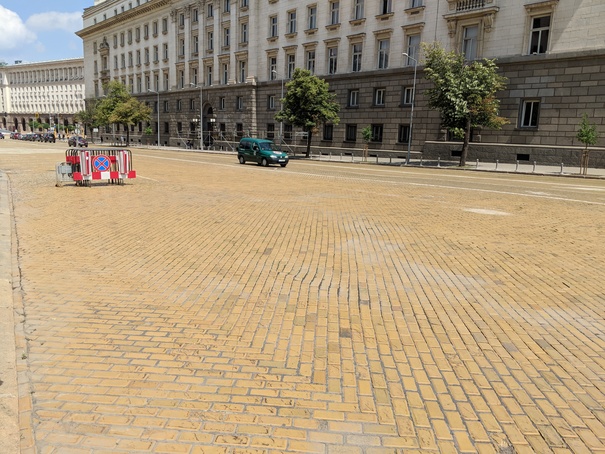
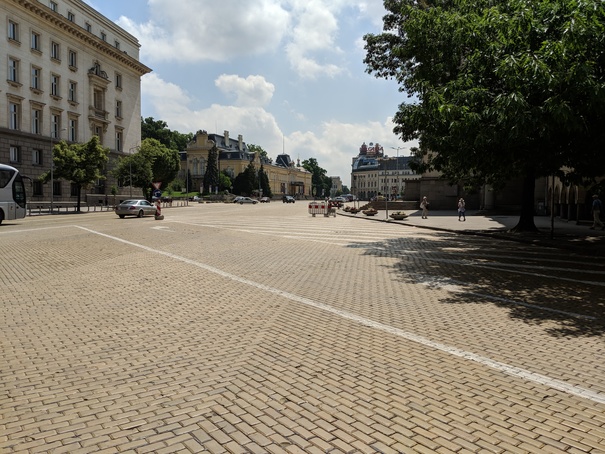
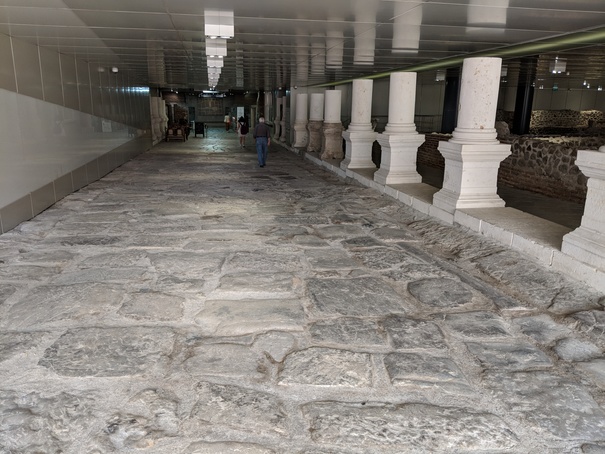
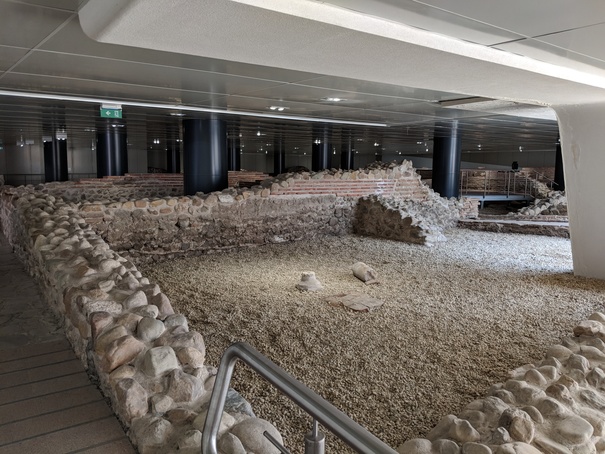
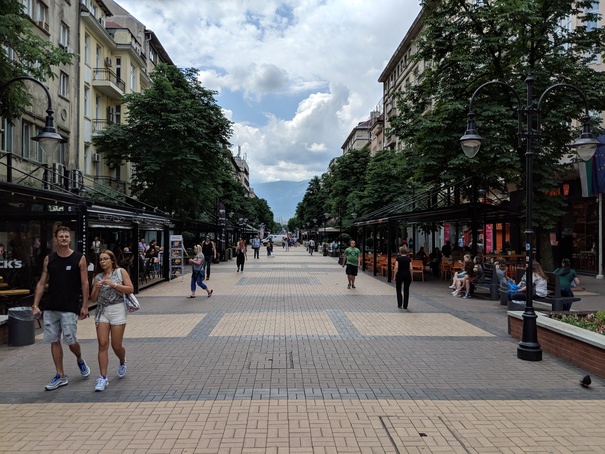
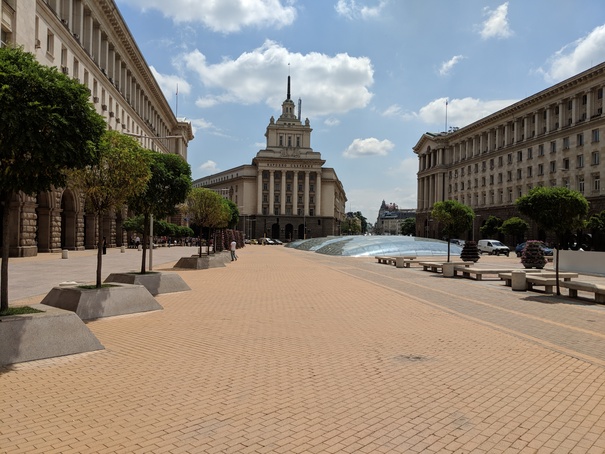
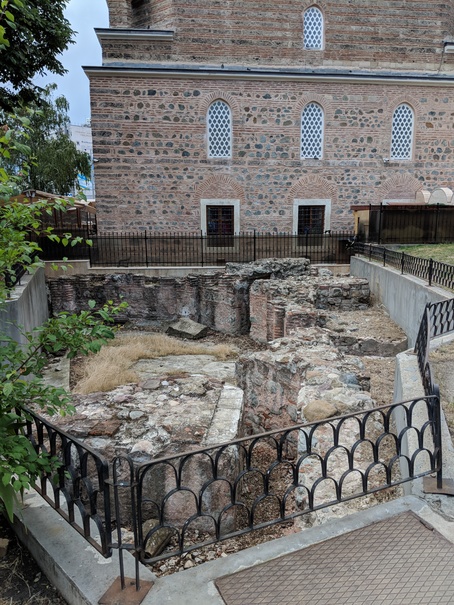
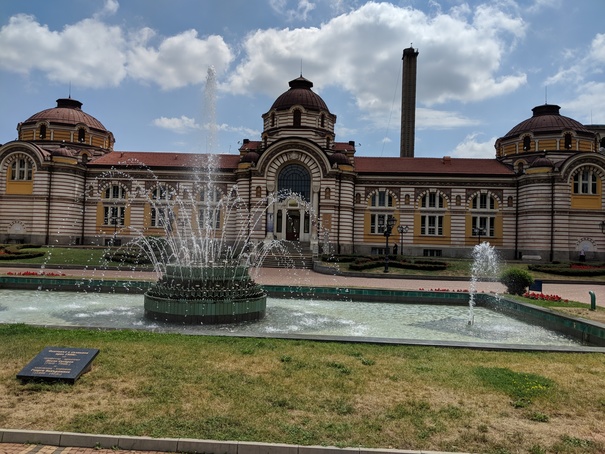
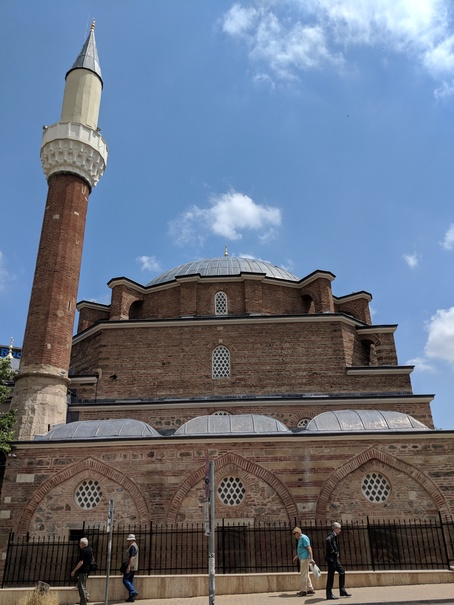
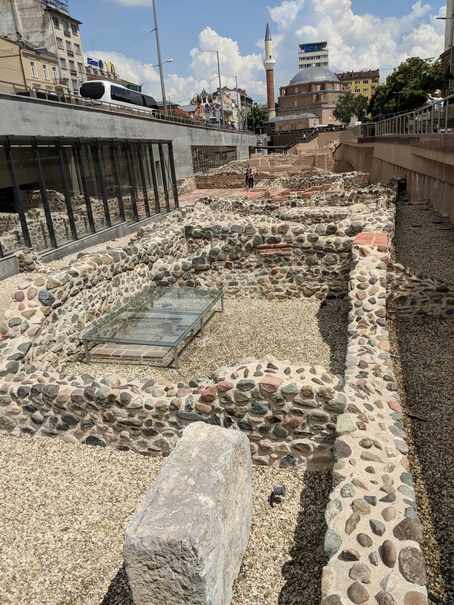
In a nutshell, the historical centre of Sofia is a feast for the eyes. The classic architecture is grand. There are parks and green spaces aplenty. There are cars of course, but it’s not the constant four-wheeled gladiator games you’d find in Bucharest. Sure, I still shoulder check before crossing the street, but I don’t do so with a sincere belief that this might just be the time I become a temporary Skoda hood ornament. Busy intersections often have elaborate underpasses that not only ensure that people may cross safely, but they also often make room for small retail businesses that hawk anything from fabric by the roll to coffee and (cheese-filled, no doubt) pastries. The city is kept remarkably clean for such a busy place and wide range of inhabitants. Evidence of a 3rd to 6th century heyday are scattered about almost everywhere. One of my favourite examples is in one of the many underpasses that doubles as archaeological exhibit. In fact, the proud Sofians have incorporated a 6th century road into the underpass. You literally walk on an ancient piece of human history, just crossing the street. While graffiti of course is evident on building sides, it’s rare indeed on historical buildings and I saw no trace of it on the completely accessible ruins. Not one. Is there honour among vandals?

If we went to many churches when we spent last spring in Italy, our fervour has lessened considerably on this trip. One that we could not pass up visiting though was the iconic Cathedral Saint Alexandar Nevski. In addition to being every bit as visually impressive as one might imagine, I liked their approach to eliciting funds for keeping the cathedral in good repair. While you could get in and admire the frescoes and everything for free, you needed to pony up 10 Lev (some 8 CAD) if you wanted to take pictures. We’ve seen this ‘photo license’ kind of approach elsewhere too; The Wieliczka Salt mine outside Krakow and the Peles Castly in Transylvania come to mind. This try-before-you-buy is a great way to not turn hopeless cheapskates away at the door.
Leave a Reply
You must be logged in to post a comment.