
As living creatures, to stay upright we have made the implicit commitment to consume nutrients with some regularity. For some, the act of eating is one of dull necessity, a relentlessly repetitive task that should be suffered through with as little fanfare as possible. Many don’t appreciate the many dimensions of edible ingredients and the countless food preparation methods that can take decades to master and are similarly unimpressed when exposed to the fruits of the labour of people who, in my humble view, are more advanced in that regard. It’s ironic perhaps that we had left France and entered Spain when we were figuratively washed over with an infectious and joyous passion for food and the people-centric culture around getting together an enjoying it with local liquids.

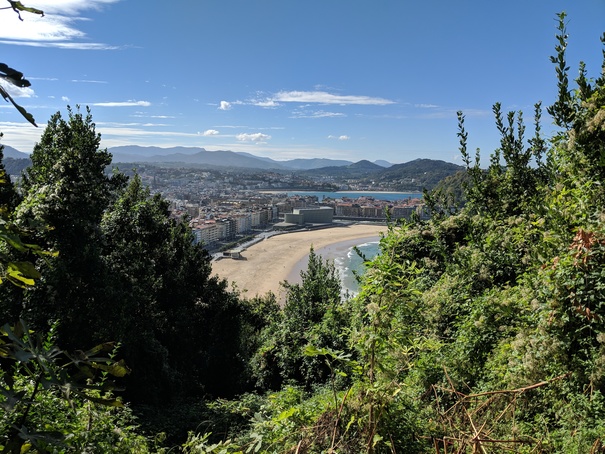
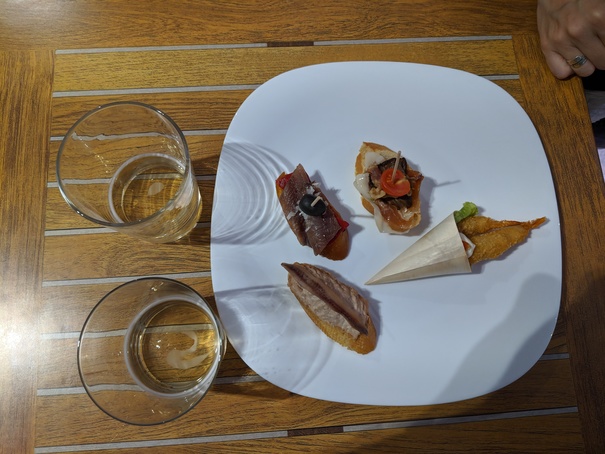
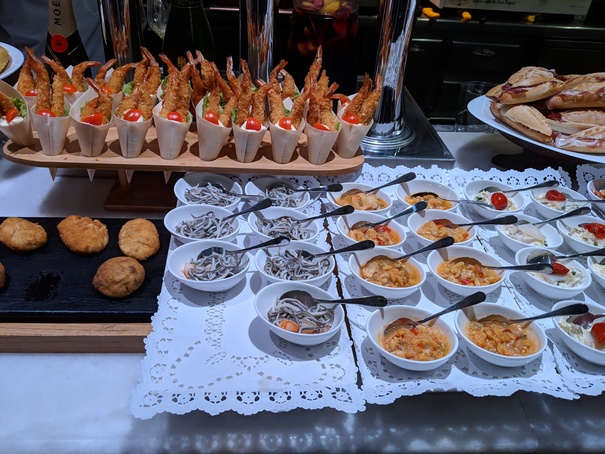
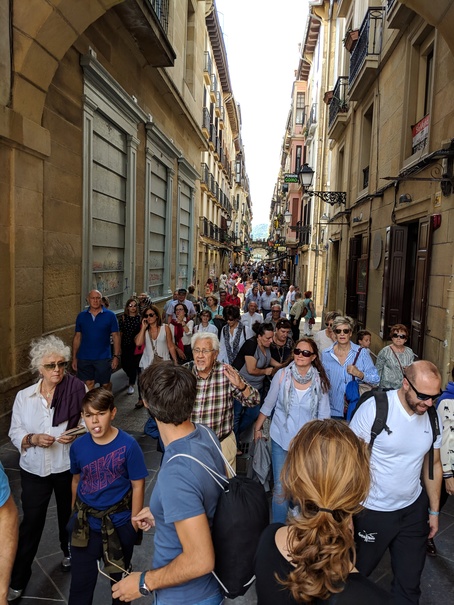
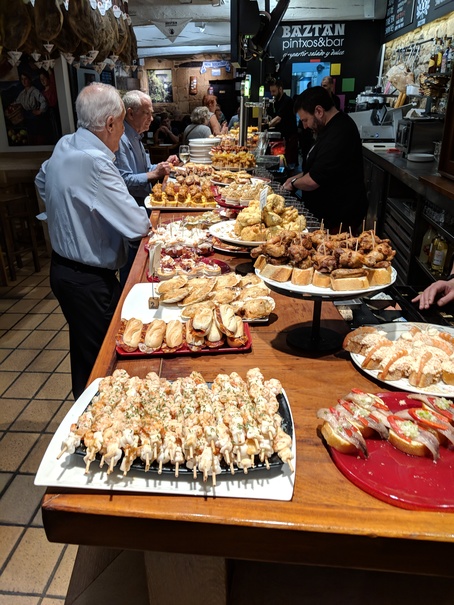
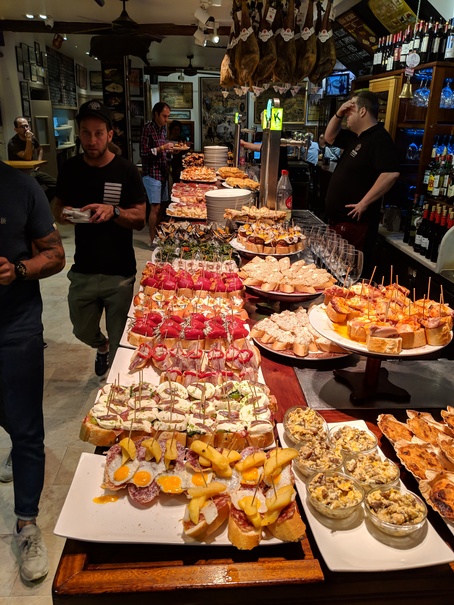
San Sebastian, or Donastia as it is referred to by the proud Basque people is one of the most well-known foodie destinations outside the main metropolitan areas to which Michelin star laden chefs tend to gravitate. In fact, due to its modest size, San Sebastian apparently boasts the highest density of Michelin stars in the world. Which is to say, there’s a whole fleet of these upper-crust food preppers stuffed into an otherwise unassuming, yet visually appealing coastal Spanish town deep in the Bay of Biscay. However, as much as we eschew the one percenters in our regular day-today, the lively, in-your-face food culture in San Sebastian is based on something eminently accessible – the diminutive, yet mighty Pintxo (pronounced pincho).
This little, often only two or three bites, morsel is the ultimate food equalizer. Infinitely variable, close-your-eyes-face-the-heavens tasty and aesthetically delightful they put the fun back in functioning gastric system. Yes, it’s a bit cliché, perhaps even a bit of an industry that exists purely because there’s now a demand for it, but be that as it may. Anyone who loves food as well as everybody else who’s open to an affair – to remorselessly cheat on their hotdog, chicken finger and fries diet, should make a point of going to San Sebastian in Spain to surrender, if only a for a few days, to the allure of the Pintxo.

But where is my manners? One cannot live on Pintxos alone. The Yin to the Pintxos Yang are in San Sebastian of the liquid nature. The most obvious one first: northern Spain is Sidra-country, i.e. a semi-dry to dry cider whose acidity enhances the flavour of many a coastal meals. Red wine drinkers who wouldn’t frown upon a glass of Rioja should remember to suffix their order with Crianza. This ensures your wine has aged just a little bit extra and pairs just criminally well Cardillada. When hitting the Pintxos hard, we’d hop around to a great number of bars and it’s important to recognize its a marathon and not a sprint and therefore, drinks even beers need to be small. Order a Zurito and you get a small maybe 150ml beer that’ll go well a couple of pintxos. Saving the best for last: Txakoli (when we pronounced it [cha’koli], people seemed to know what we meant and served us some, so I think it’s something like that). This is a white, semi-sparkly wine whose grapes were grown amidst the sea-salty breeze close to the coast of the Bay of Biscay. This infuses a subtle saltiness that is simply to die for. While it’s probably true not everybody will love it as much as we do, what I can say is that it would be a shame to not try it.

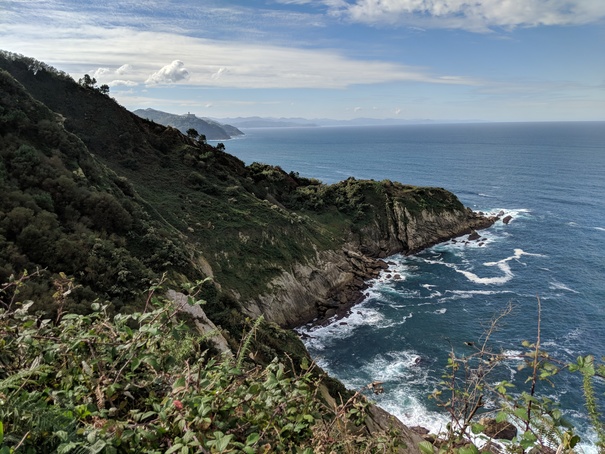
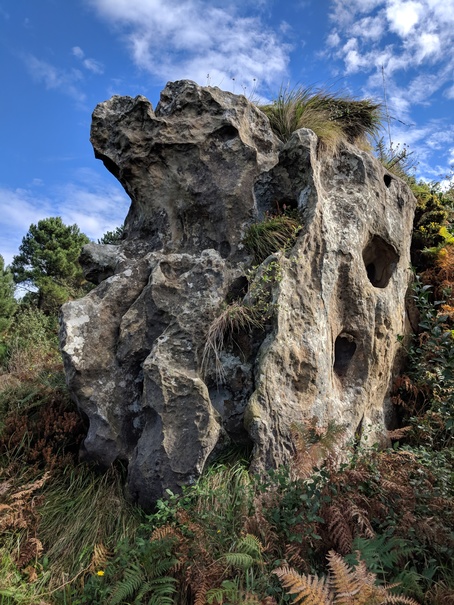
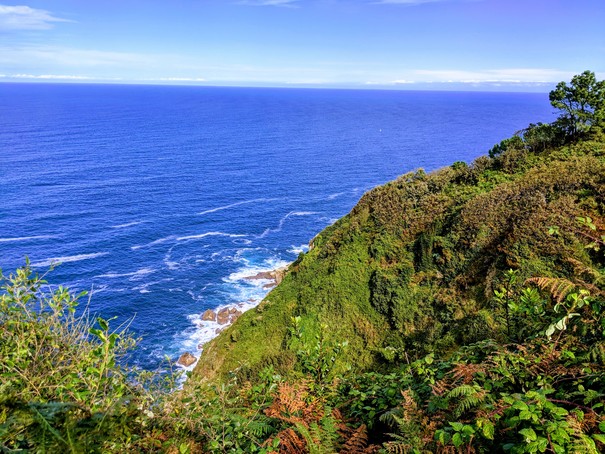
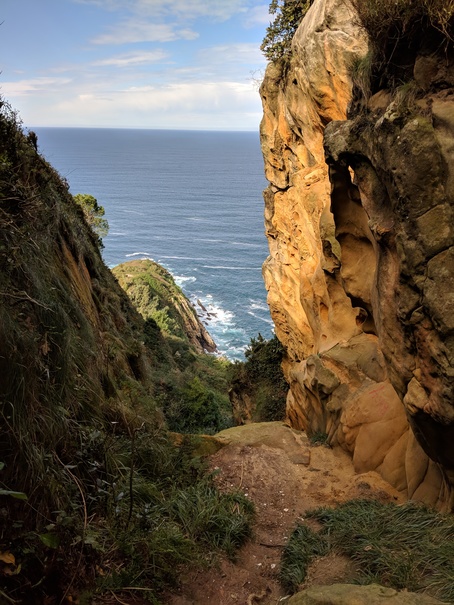
If the caloric intake are nearing concerning levels, one way to burn off the excess would be to lace up the best gripping walking shoes and set out to hike the coastline north. If you follow the trails far enough, you’ll hit Pasaia, but there’s plenty of coastal splendour along the way that one doesn’t have to commit the three, four hours to get there even if there are buses that can take you back on a decidedly less scenic route. While there’s signage along the way, the trail hugs the coastline so closely that the path meanders in unexpected directions. Fans of nature in general and rugged coastlines in particular would enjoy the hike.
Accommodation-wise, San Sebastian was our most expensive stop, even though we didn’t stay in the old town but rather in Antigua a mere five minute walk from the beach. A fact we were able to take advantage of a number of times despite being well into October, when the water temperature was still a mostly-enjoyable 19-20 degrees Centigrade. One of the most memorable moments, in fact, was my bobbing around like some pale, bizarre oversized rubber ducky in the salty Atlantic, under a clear blue sky taking in the scenery of the stunning bay in San Sebastian as we were killing time before the evening’s upcoming Pintxos feast.
Leave a Reply
You must be logged in to post a comment.